2026-03-17

Recently, Logical Qubit Technology successfully completed two consecutive funding rounds, including its Pre-A+ and Pre-A++ financings, totaling hundreds of millions of RMB. The Pre-A++ round was jointly led by Fortune Capital and Matrix Partners China, with participation from Huakong Fund, Shenzhen Capital Group, and Kangjun Capital. Existing investors including ZJU Joint Innovation Investment, Oriental Fortune Capital, Huaxia Hengtian, Chengrui Sheng, and West Lake Sci-Tech Venture Capital also increased their investments.
The Pre-A+ round was backed by Haiwang Capital under Pudong Sci-Tech Innovation Group, Lushi Investment, and continued investment from the Sci-Tech Innovation Fund under Zhejiang Innovation Investment Group.
Chip Design, Fabrication, and Engineering Capability Form the Core Competitive Advantage
Superconducting quantum computing, built upon semiconductor micro- and nano-fabrication technologies together with RF and microwave control technologies, has become one of the worl's leading quantum computing platforms due to its scalability and fast control speeds.
Looking toward universal quantum computing, superconducting quantum computing still faces major technical and engineering challenges. The core challenge lies in improving quantum chip performance while simultaneously scaling system size, ultimately enabling fault-tolerant logical qubits and practical quantum advantage. Achieving this goal requires breakthroughs in superconducting quantum chip design, micro- and nano-fabrication processes, and quantum control methodologies, while also strengthening engineering capabilities such as higher-integration quantum measurement and control systems, denser RF transmission architectures, higher-cooling-capacity cryogenic systems, and more intelligent quantum control software.
Logical Qubit Technology was incubated from the superconducting quantum computing team at Zhejiang University. Chief Scientist Wang Haohua studied under John Martinis, who was awarded the 2025 Nobel Prize in Physics for contributions to superconducting circuit quantization. The team has been deeply engaged in superconducting quantum computing for nearly two decades and has refreshed the world record for the number of globally entangled qubits in superconducting quantum systems three times. The company has successively released superconducting quantum chips including "Tianmu" and"Moganshan", with key technical indicators such as qubit count, decoherence time, and two-qubit gate fidelity reaching internationally leading levels.
Since its founding in June 2022, Logical Qubit Technology has established a full-stack superconducting quantum computing technology platform through intellectual property commercialization and continuous technological innovation, covering chip design and fabrication, quantum measurement and control systems, RF transmission systems, software control platforms, and quantum algorithms and computing capabilities.
Recently, the company achieved a series of important milestones in superconducting quantum chip technology, engineering development, and commercialization:
August 2025 — Core members of Logical Qubit Technology published new research results in Nature, demonstrating a novel"hot"topological edge state on the self-developed"Tianmu-2" 100-qubit quantum chip, providing a new pathway for protecting fragile quantum information.
September 2025 — Logical Qubit Technology was selected for the Ministry of Industry and Information Technology's "Open Competition"quantum error correction coding project.
November 2025 — In recognition of its achievements in superconducting quantum chip technology, Logical Qubit Technology was selected as one of Zhejiang Province’s first key enterprises in the Future Industries"Four Libraries"cultivation program.
January 2026 — Core members of Logical Qubit Technology participated in the world's first experimental demonstration of qLDPC quantum error correction on the self-developed"Kunlun"high-connectivity superconducting quantum chip, further advancing both surface-code error correction and next-generation quantum error correction approaches.
February 2026 — The scientific achievement Key Technologies and Applications of High-Connectivity Superconducting Quantum Chips, jointly completed by Zhejiang University, Zhejiang University Hangzhou Global Scientific and Technological Innovation Center, and Logical Qubit Technology, received the First Prize of the Zhejiang Provincial Technological Invention Award.
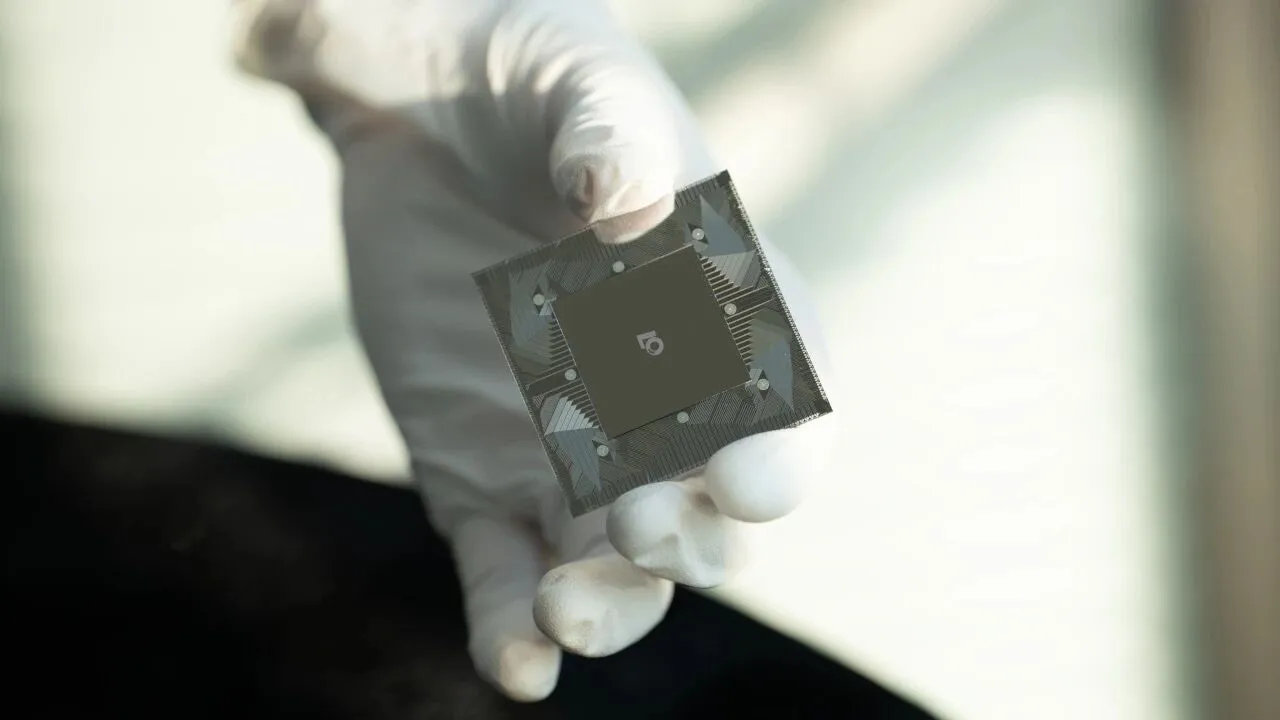
Engineering Capabilities
The company independently developed a highly synchronized, high-precision, and high-efficiency 100-qubit measurement and control system. Its modular architecture can scale to synchronized control of thousands of qubits. By adopting a quantum-classical hybrid approach combining classical computing and quantum sampling, the system enabled rapid combinatorial optimization problem solving on the Tianmu-2 superconducting quantum chip.
To minimize thermal load, noise, and crosstalk while enabling efficient and high-density signal transmission, the team independently developed a high-density flexible RF transmission system featuring excellent cryogenic compatibility, high-fidelity signal transmission, and multi-channel integration. The system achieves single-qubit gate fidelities exceeding 99.9%, laying the foundation for future thousand-qubit-scale measurement and control systems.
In addition, to accelerate superconducting quantum chip iteration cycles, the team established a dedicated micro- and nano-fabrication center together with a quantum control center and has already built five full-stack quantum computing systems. Based on this infrastructure, the company achieved major technical breakthroughs, including coherence times approaching the millisecond level on small-scale chips.
"In recent years, superconducting quantum chips have made remarkable progress and remain the team's primary focus and core capability. Looking toward universal quantum computing, achieving larger-scale integration will still require several more years. Long-term competition in quantum computing depends on technological leadership and engineering capability, which is exactly what our team continues to pursue," said Wang Zhen, Founder and CEO of Logical Qubit Technology.
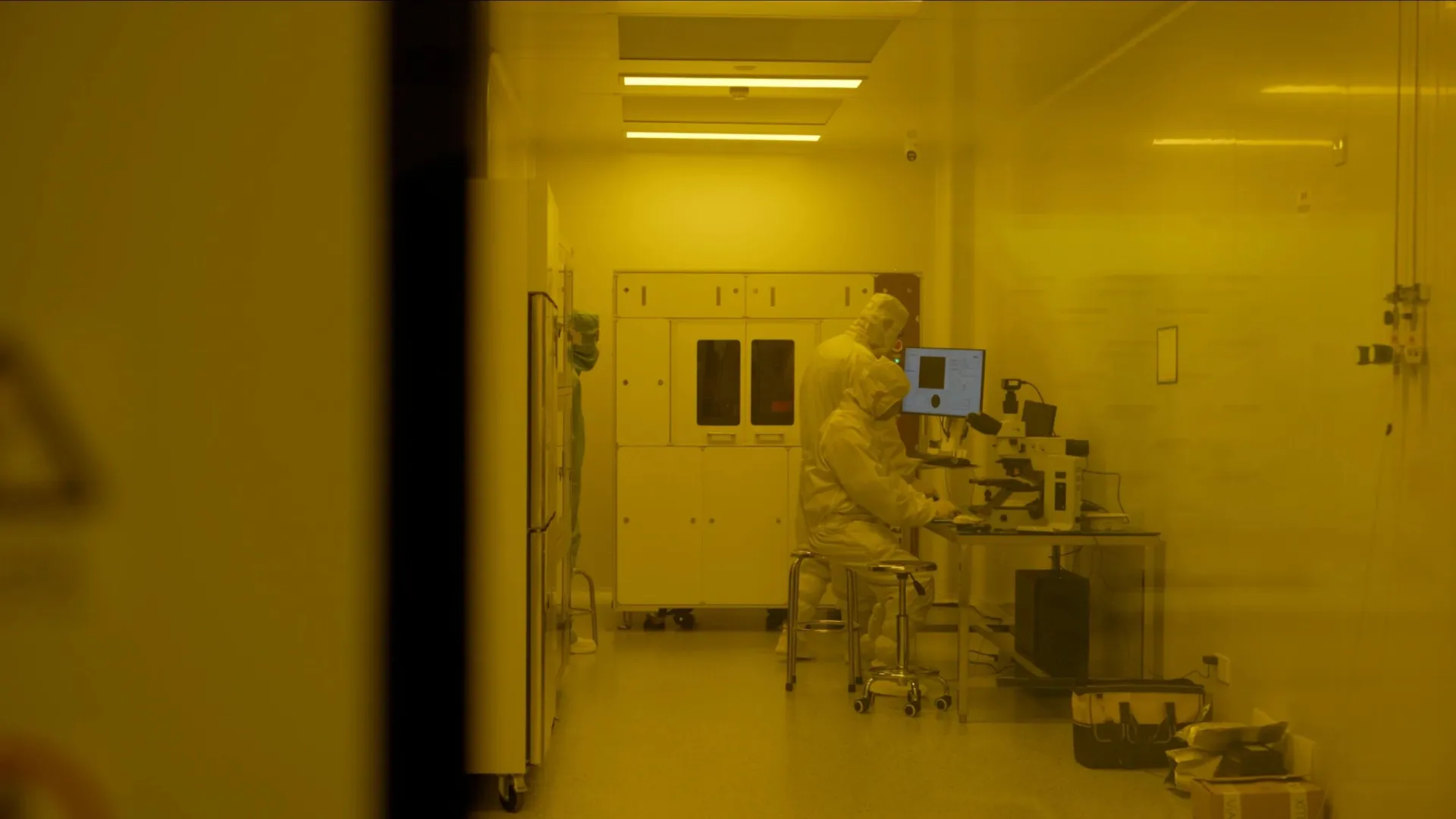
Over the past six months, while continuing to advance technological innovation, Logical Qubit Technology has also achieved significant commercialization milestones. The company successfully won and delivered a project worth tens of millions of RMB for a major research institution customer, in which the superconducting quantum chips were procured through single-source purchasing. The company also won a small-qubit quantum computer project from a university customer, establishing an early commercial deployment cycle within the research market.
Driven by rapidly growing demand for computing power and increasing attention toward quantum computing, more commercial enterprises are beginning to explore quantum technologies. The commercialization process is gradually evolving from"scientific computing"toward broader"industrial adoption". During this process, Logical Qubit Technology has started collaborations with leading companies in pharmaceuticals, materials science, finance, and other sectors in China to better understand practical business scenarios and explore real-world quantum computing applications.
"Developing quantum computing technologies and promoting industrial adoption is an extremely challenging undertaking," said Wang Zhen. "Although quantum computing is receiving enormous attention today, we remain fully aware that this is a long-term endeavor. While continuing to strengthen our technologies, we hope to explore the commercialization path of quantum computing through products such as full-stack quantum computers and cloud platforms, building long-term value and allowing society to truly experience the transformative impact of quantum computing."